


I was living in Toronto, working in customer service at a telecom company.
But every two weeks, my paycheck vanished faster than I could say “overdraft.”
Rent, groceries, debt payments, and I started thinking about a loan.
I had grown up with the idea that credit cards were dangerous, that loans were something people took when they were desperate, and that “debt” was a word you should avoid at all costs.
And I didn’t know that credit, when used wisely, could buy you freedom.
When you get to my last tip, you will gain knowledge on how to use and improve your credit score.
2023 report from Statistics Canada
My paycheck had just hit.
I should have felt relieved. But instead, I felt sick.
I knew exactly where that money was going: rent, phone bill, credit card minimums.
I could predict the balance down to the last $10, and I thought to myself: ” Is this it? Is this what adulthood is supposed to feel like?“
I had a lot of questions, and of course, I had to answer them too.
Tip 1
Look at your credit reports, really
When I finally looked at my credit report, I saw a missed payment I thought I closed, an old store card still “active,”
Avoiding it only made it worse.
What did I do instead:
- I filed disputes
- Cleared one late payment
- down some balances
My score jumped 34 points in a month.
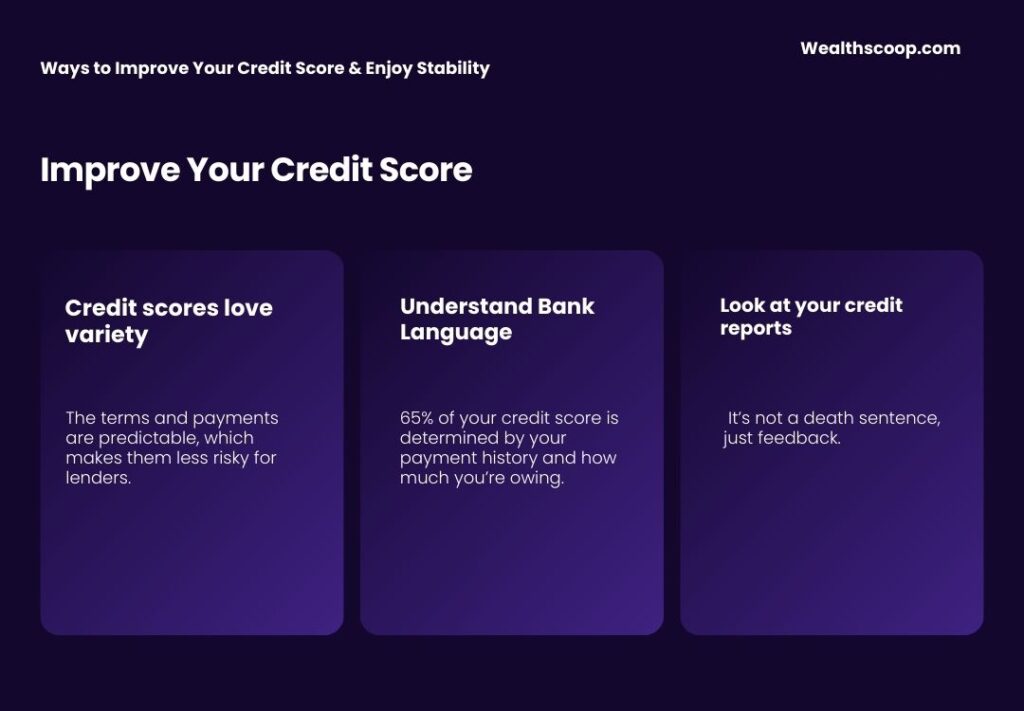
So if you’ve been putting it off, trust me: facing it is the first win. It’s not a death sentence, just feedback. And once you start, momentum kicks in.
Tip 2
Understand Bank Language
You’re underestimating Online Forums.
From YouTube rabbit holes to credit blogs, I’ve found that managing your credit score doesn’t require too much from you.
65% of your credit score is determined by your payment history and how much you’re owing.
Once I informed my branch manager that I was working on improving my credit utilization and building long-term financial health, I was bumped from $1,500 to $3,000 almost immediately.
These forums will teach you how to speak the language that your branch manager needs to hear and approve your credit request.
Tip 3
Credit scores love variety
There are 3 main categories of accounts you can have:
1. Revolving Credit
This is the most common type, and credit cards are the classic example. With revolving credit, you have a set limit; you can borrow as much (or as little) as you need within that limit, and you can carry a balance from month to month.
The catch? Interest piles up if you don’t pay in full.
2. Installment Loans
Think personal loans, car loans, or student loans.
You borrow a fixed amount upfront and pay it back in regular installments (monthly payments) over a set period.
The terms and payments are predictable, which makes them less risky for lenders.
3. Secured Credit
This usually takes the form of a secured credit card or loan. You put down a deposit (collateral) that acts as your credit limit.
If you fail to pay, the lender keeps your deposit. Secured accounts are often a first step for people building or rebuilding credit.
So I got creative, I opened a secured card with a $500 deposit and used it only for Netflix, I took out a credit-builder loan from Refresh Financial and treated it like forced savings, and set calendar reminders to pay early, not just on time.
In six months, my credit score had climbed 112 points, and with my score now in the mid-700s, something wild happened: I qualified for a business loan.
Two offers landed in my inbox. One from my old credit range:
- $5,000 at 22.99% interest
- Monthly payments of $193
5 Things to Know About Credit
1. Credit is about how disciplined you are
2. Every move counts on your credit score
3. Clarity, consistency, and a plan are all you need to start
4. The credit system isn’t rigged against you if you understand it.
5. Good credit gives you time, space, and choice.
Here is what I would do if I had to improve my credit score
1. Pull Your Credit Reports
Free through Borrowell or Credit Karma. Read every line. Look for errors.
2. Dispute Any Mistake
Use the online portals; it is easier than you think
3. Keep One Card at 9% Utilization
Not 0%, not 30% under 9% is the sweet spot
4. Ask for Limit Increases Strategically
Wait until your score rises, then request increases using soft inquiries
5. Invest in Yourself
Credit should fund growth, not lifestyle