


Everything changes when two people come together and choose to do life together. It moves from love and butterflies to decisions involving money.
And money?
Money can make love blossom when there’s room to share your favorite meal in the dead of the night. That’s why you must discuss money-related topics together.
Here’s why it’s so important for new couples to plan towards financial freedom the right way:
It keeps surprises from turning into shocks.
Imagine finding out your partner has a mountain of debt or a spending habit that doesn’t align with yours. Planning together puts everything on the table, so there are no “oh, by the way…” moments later.
It builds trust.
Money is one of those sensitive topics that couples either avoid or fight about. Sitting down and making a plan says, “I trust you enough to share where I’m at, and I want us to win together.” That’s powerful.
It makes dreams real.
Whether it’s owning a home, traveling, or even just creating a comfortable lifestyle, those things don’t just happen. When you both plan, you can align your goals and actually map out the steps to get there.
It protects you in tough times.
Life comes with experiencing job loss, health issues, and unexpected bills. Having a plan means you’re not scrambling in a crisis; you’ve already built some safety nets together.
It prevents resentment.
If one person feels like they’re carrying all the financial weight, it can create bitterness. Planning gives both of you a clear picture of what’s fair and what works for your unique situation.
In this guide, you’ll know what parts of proper financial planning make the dream life a reality.
Key Components of Financial Planning
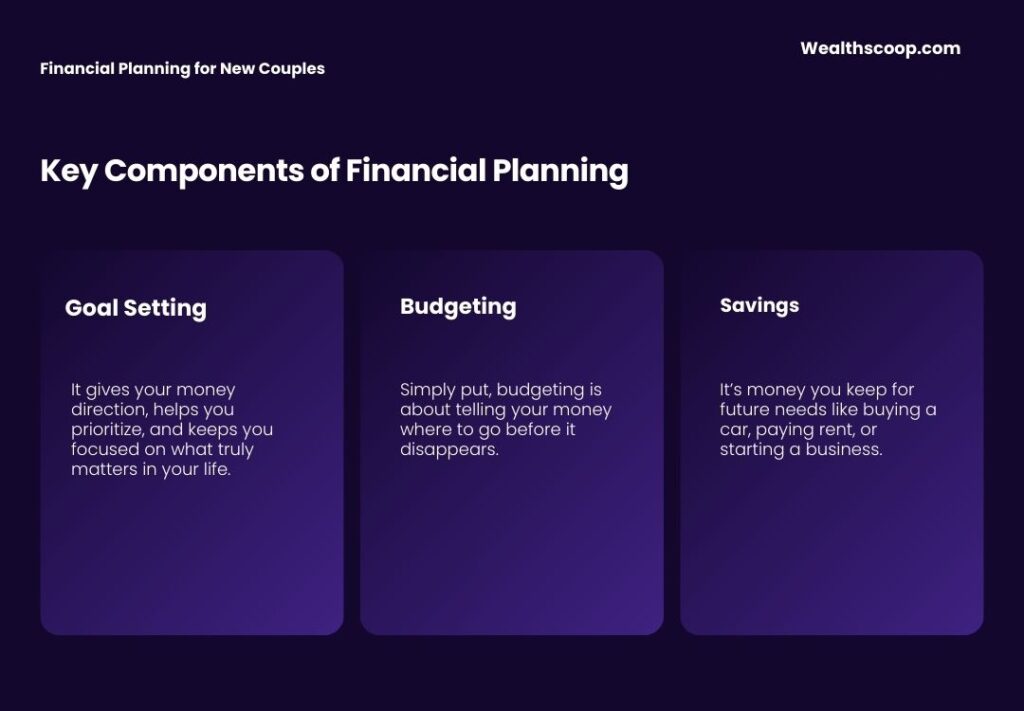
Goal Setting
Goal setting is the process of identifying something you want to achieve and creating a plan to reach it. In financial planning, goal setting means defining specific, realistic money-related objectives and taking intentional steps to accomplish them.
It gives your money direction, helps you prioritize, and keeps you focused on what truly matters in your life.
What do you want to achieve financially?
Do you want to pay for a new house? Fund your degree? Retire comfortably, or start a business?
Budgeting
Budgeting is the process of planning how to spend and manage your money over a specific period—usually monthly. It helps you track your income, control expenses, save more, and avoid debt.
Simply put, budgeting is about telling your money where to go before it disappears.
What you’re doing when you budget:
- Tracking income and expenses to ensure you’re spending wisely.
- Helps avoid overspending and builds discipline.
Savings
Savings is the act of setting aside a portion of your income instead of spending it all. It’s money you keep for future needs like buying a car, paying rent, or starting a business.
We’ve put together a guide on how to budget and save money that can help you develop a simple and realistic strategy that meets your needs.
When you set aside money regularly for emergencies, future expenses, or specific goals, you’re saving for the future.
Investing
Investing is the process of using your money to buy assets such as stocks, real estate, or businesses that have the potential to grow in value or generate income over time.
Unlike saving, where you store money for safety, investing puts your money to work so it can multiply and help you build wealth.
Putting your money to work in vehicles like stocks, mutual funds, or real estate to grow wealth over time.
Debt Management
Debt management is the process of organizing, controlling, and paying off your debts strategically and responsibly.
It involves creating a plan to reduce what you owe, avoid unnecessary borrowing, and free up your income for savings and investments.
In simple terms, debt management is how you take charge of your borrowing so it doesn’t take charge of your life.
Tax Planning
Tax planning is the process of organizing your finances smartly and legally to reduce how much tax you pay.
It involves understanding tax laws, identifying available deductions, and using tax-friendly strategies to maximize your income and savings.
It helps you
- Understand how to minimize taxes legally and maximize returns.
- Avoid penalties or surprises from the tax authorities
Financial Planning Tips for New Couples
Have “The Money Talk” Early and Often
In every thriving relationship, especially marriage. Money is one of the most sensitive but important topics to discuss.
Having “the money talk” early means sitting down with your partner before problems arise, and openly discussing your financial situations, goals, values, habits, and expectations.
It is about building trust, teamwork, and shared vision.
Money can be a major source of stress in marriage. Sit down regularly to talk openly about
- Income
- Debts
- Financial goals
- Spending habits
- Budget
Set shared goals like buying a house, paying off debt, or saving for a vacation. Being transparent helps avoid surprises and builds trust.
Set Up a “His, Hers, and Ours” System
In many relationships, one of the biggest sources of tension isn’t how much money is earned but how money is managed.
The “His, Hers, and Ours” system creates a healthy balance between individual freedom and joint responsibility.
To balance independence and unity:
- Joint account: For shared expenses (rent, food, kids, bills)
- Personal accounts: For individual spending (guilt-free)
This approach helps couples feel empowered without resentment over spending differences.
Automate Your Savings
To automate your savings means setting up your bank or financial app to transfer a fixed amount of money from your income to your savings account automatically, either weekly, monthly, or every payday, without you needing to do anything.
Treat savings like a bill. Set up automatic transfers from your checking account to a savings account every month.
You can even break it down:
- Emergency fund
- Vacation fund
- Retirement fund
- Child education fun
Plan for Kids and Education Early
Consider education savings plans or fixed deposits to secure their future without pressure.
Start small and increase the amount over time. Automation ensures consistency and reduces temptation.
If you plan to have kids, start saving early for:
- Maternity costs
- School fees
- Health insurance
Consider Financial Counseling or Courses
One of the best investments a couple can make, especially early in marriage, is in financial education.
Whether through counseling, courses, or books, gaining financial knowledge together helps couples make smarter decisions, avoid costly mistakes, and grow stronger as a team.
Consider:
- Taking a finance course together
- Meeting with a financial planner or marriage counselor
Building financial literacy as a team strengthens your relationship and decision-making.
Final thought
People often say communication is key in relationships. What they do not tell you is that financial communication is the master key.
Once you learn how to talk about money without shame, without fear, and without ego, everything changes.
I highly recommend couples have the financial talk early before habits harden, misunderstandings grow, and resentment takes root.
Discussing income, spending styles, debts, and financial goals at the start of a marriage sets a strong foundation for teamwork.
It’s about creating transparency, trust, and a shared vision for the future.
The earlier you address it, the easier it is to build healthy money habits together, rather than trying to fix broken ones later, because in love, just like in money, the real magic happens when both partners are all in.