

Everywhere we turn, we are urged to buy more, upgrade faster, and keep up with trends we did not even know existed.
In this constant swirl of temptation, spending often becomes automatic, a quick swipe or tap without much thought about whether those purchases truly serve us.
Amid all this noise, many people feel financially stretched, anxious, or disconnected from their own money choices.
They wonder why, despite working hard and earning well, saving feels impossible, debt keeps growing, and money remains a constant source of stress rather than security.
In this article, we will explore mindful spending, why it matters, and practical steps you can take to cultivate it in your daily life.
What is Mindful Spending?
Mindful spending is the intentional, conscious use of money in ways that reflect your values, priorities, and goals. It is about awareness and purpose, rather than impulse or habit.
“Mindful spending is about creating a deliberate connection between your money and your values. When you spend with awareness, every purchase becomes an investment in the life you truly want, rather than a reaction to impulse or pressure.”Laura Bennett, Certified Financial Planner & Author of The Conscious Wallet
Think of mindful spending as similar to mindful eating. Instead of wolfing down a meal without tasting it, you slow down, savor each bite, and decide whether you are truly hungry.
Likewise, mindful spending encourages you to pause and ask:
- Do I genuinely want or need this?
- Does this purchase add value to my life?
- Am I spending out of emotion like stress, boredom, or fear of missing out (FOMO)?
- Could this money be better used elsewhere?
It is not about guilt or strict budgets. It is about spending your money in ways that bring joy, security, and fulfillment.
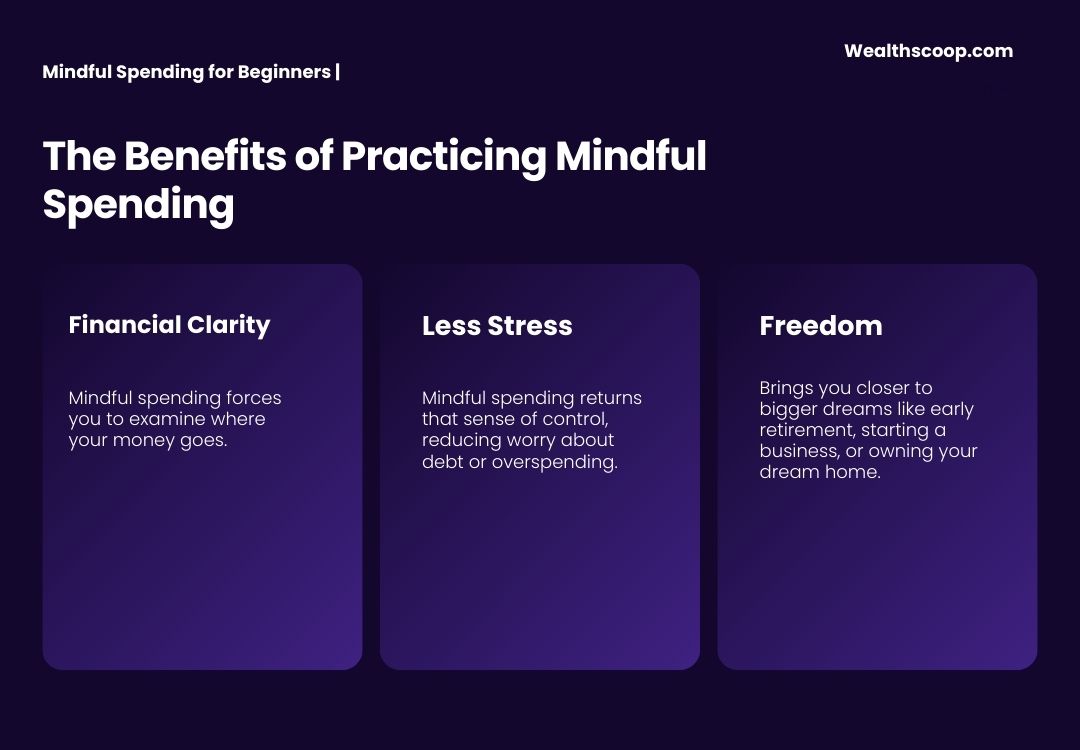
The Benefits of Practicing Mindful Spending
Practicing mindful spending brings a host of benefits:
1. Financial Clarity
Mindful spending forces you to examine where your money goes.
Once you identify spending patterns, you can cut costs in areas that do not serve you and allocate funds toward things that do.
2. Less Stress
Money-related anxiety often comes from feeling out of control. Mindful spending returns that sense of control, reducing worry about debt or overspending.
3. Greater Life Satisfaction
By spending on what matters most to you, whether it’s travel, hobbies, or family, you increase your sense of meaning and happiness.
4. Freedom
Mindful spending can help you save and invest more, bringing you closer to bigger dreams like early retirement, starting a business, or owning your dream home.
5. Sustainable Consumption
You are less likely to waste resources on things you do not need, which benefits both your wallet and the environment.
How to Cultivate a Healthy Mindful Spending Habit
In a world where it is now too easy to spend without thinking as a result of the Media and Technological advancements, we swipe our cards, tap our phones, and fill our shopping carts sometimes without even remembering why.
Yet too often, mindless spending leaves us stressed, stretched thin, and wondering where our money went.
That is where mindful spending comes in. It is not about strict budgets or saying “no” to everything fun. Instead, it is about making sure your money supports the life you truly want.
Here is how to start practicing mindful spending today.
1. Define Your Values
Mindful spending begins with knowing what truly matters to you.
- Is travel a top priority?
- Do you value freedom from debt?
- Are you passionate about supporting certain causes?
- Do you crave flexibility in your work-life balance?
Make a list of your top 5 values. Keep it somewhere visible, like in your wallet or on your phone. This list becomes your compass for making spending decisions.
2. Track Every Expense
Awareness is key. For at least one month, track every penny you spend. Apps like Mint, YNAB (You Need a Budget to work with ), or even a simple notebook can help.
Once you see where your money goes, ask yourself:
- Which expenses bring joy or add value?
- Which ones feel wasteful or unnecessary?
- Are there trends you didn’t notice before?
Many people discover they spend far more than they realized on convenience items, takeout, or impulse buys.
3. Pause Before Purchases
Implement a simple rule: Wait 24 hours before making non-essential purchases.
Often, the urge to buy fades once you give yourself time. For bigger expenses (over $100, for example), consider waiting a week or even a month.
Questions to ask yourself before buying:
- Is this purchase aligned with my values?
- Do I already own something similar?
- How often will I use or enjoy this?
- Can I afford this without debt or sacrificing other priorities?
4. Budgeting
Mindful spending does not mean cutting out all fun. Instead, allocate funds specifically for things you love. A “fun money” category in your budget gives you freedom to spend without guilt.
Examples:
- $50/month for books
- $75/month for dining out
- $100/month for hobbies
5. Focus on Experiences, Not Things
Numerous studies show that experiences deliver more long-term happiness than material items. Vacations, concerts, or workshops create memories and deepen connections.
Ask yourself:
- Will this purchase create memories?
- Will it strengthen relationships?
- Will it help me grow or learn?
If yes, it may be worth the cost even if it is more expensive than a physical object.
6. Practice Gratitude
Mindless spending often stems from scarcity thinking, believing you never have enough. Practicing gratitude shifts your mindset to abundance.
Daily gratitude practices might include:
- Write three things you are grateful for each day
- Appreciating what you already own
- Reflecting on past purchases that brought you joy
7. Create Financial Goals
Mindful spending needs a destination. Set clear, meaningful goals for your money, such as:
- Paying off credit card debt
- Building a 6-month emergency fund
- Saving for a home down payment
- Investing for retirement
- Funding travel adventures
When tempted by impulse purchases, remind yourself of these goals. Does this purchase bring you closer to or further from your dreams?
Common Obstacles to Mindful Spending and Their Solutions
Despite good intentions, obstacles can derail mindful spending. Let us look at a few obstacles and how to overcome them.
1. Emotional Spending
Many people spend to soothe stress, loneliness, or boredom. Retail therapy can feel good in the moment, but often leads to guilt later.
Solution: Finding non-spending alternatives for comfort, like exercise, journaling, meditation, or calling a friend.
2. Social Pressure
It is hard to say no when friends want expensive dinners, trips, or group gifts.
Solution: Being honest about your goals. Suggest budget-friendly alternatives or set boundaries without guilt. True friends will respect your choices.
3. Marketing Manipulation
Companies spend billions studying how to trigger your buying instincts. Flash sales, limited offers, and influencer recommendations are designed to spark your interest in purchasing.
Solution: Unsubscribe from marketing emails, unfollow accounts that make you feel “less than,” and remind yourself that sales will always come around again.
4. Lack of Awareness
Many people simply do not know where their money goes.
Solution: Commit consciously to tracking your spending for at least 30 days. Knowledge is the first step to change.
5. Fear of Missing Out (FOMO)
Seeing others buy new gadgets, clothes, or experiences can make you feel like you’re missing out if you don’t do the same.
Solution: Focus on your values and goals.
Remind yourself that social media shows a highlight reel, not reality.
Costs of Not Practicing Mindful Spending
Mindless spending can derail financial goals, create debt, and lead to feelings of dissatisfaction.
Studies show that people often report higher happiness levels from experiences rather than material goods, but without mindful awareness, many keep chasing the next purchase high.
Many people do not realize how much mindless spending creeps into their lives. Small, seemingly insignificant purchases can accumulate into significant financial leakage.
Here are some of the after effects:
1. Chronic Debt – Impulse purchases and lifestyle inflation can trap you in a cycle of credit card balances, loans, and high-interest payments.
2. Financial Stress – Constantly worrying about bills or living paycheck to paycheck can erode mental and emotional well-being.
3. Missed Goals – Money that could fund travel, education, a home, or retirement gets lost to unnecessary expenses.
4. Regret and Buyer’s Remorse – Frequent purchases that don’t truly add value often leave you feeling dissatisfied.
5. Limited Flexibility – Without savings or intentional spending, you lack the financial freedom to seize opportunities or handle emergencies.
Essential Reminder:
Mindful spending is not just a money tip; it is about living intentionally and making choices that reflect your values. It turns money into a tool for purpose, security, and joy.
It is not about perfection; mistakes will happen. What matters is pausing before you spend and asking, “Does this help me create the life I want?”
Mindful spending isn’t just about saying no to unnecessary purchases — it’s about creating a lifestyle where your money serves you instead of the other way around.
When practiced consistently, it can help you stop living in survival mode and start building security. If you’re ready to take this further, here’s how financial confidence can help you break free from living paycheck to paycheck and build habits that support long-term stability.
[…] shift begins with mindful spending. This means pausing before every purchase and asking yourself: Do I really need this? Does it align […]
[…] if you’re ready to go deeper into aligning your spending with your values and goals, our guide to mindful spending will show you how to make money choices that feel good in the long […]