


Money is more than numbers on a bank statement. It’s tied to our emotions, decisions, habits, and the way we see the world. While financial strategies and budgeting tools are useful, the truth is: your relationship with money matters even more.
In this guide, we’ll explore the psychology behind financial decisions, the habits that either build wealth or destroy it, and practical steps you can take to reshape your mindset for long-term success.
Why the Psychology of Money Matters
Most financial advice focuses on what to do: save, invest, avoid debt. But very few talk about why people struggle to follow these rules in the first place.
- Behavior > Knowledge → It’s not about knowing that you should save; it’s about controlling the impulse to spend.
- Emotions Drive Decisions → Fear, greed, stress, and comparison influence choices more than logic.
- Mindset Shapes Reality → The way you see money—scarce or abundant—can determine how you earn, spend, and grow it.
When you understand your own psychology, you can break free from destructive cycles and start building wealth that lasts.
7 Core Money Habits That Shape Your Future
1. Spending with Intention
Mindless spending is one of the most common reasons people feel stuck financially. A lot of purchases are not about necessity at all—they’re about emotions.
People buy for comfort after a stressful day, for status to impress others, or for comparison because “everyone else has it.” The problem is that these choices bring only short-term satisfaction but create long-term strain on your finances.
The shift begins with mindful spending. This means pausing before every purchase and asking yourself: Do I really need this? Does it align with my goals? Will this still matter to me next week, next month, or next year?
By filtering decisions through intention rather than impulse, you start directing your money toward the things that truly add value—whether that’s paying off debt, building savings, or investing in experiences that enrich your life.
2. Saving Before You Spend
Most people approach saving as an afterthought—they cover their bills, spend what they want, and then try to save what’s left. Unfortunately, what’s left is usually nothing. Wealth builders do it differently: they flip the order.
The habit is simple but powerful—pay yourself first. As soon as income comes in, set aside a fixed percentage for savings or investments before you touch anything else.
Automating this process makes it effortless; your savings grow in the background while you live on the remainder. Over time, this one adjustment can completely transform your financial trajectory. It’s not about how much you earn, but how consistently you save and invest.
3. Building an Emergency Fund
Unexpected expenses are a part of life. A medical bill, car repair, or sudden job loss can derail your finances if you’re unprepared. Without a cushion, even small surprises push people toward high-interest debt—credit cards, payday loans, or borrowing from friends.
An emergency fund is your safety net. Aim to save three to six months’ worth of living expenses in a separate, easily accessible account.
Think of it as financial peace insurance—it doesn’t make money grow, but it keeps your financial foundation from collapsing when life throws a curveball.
With an emergency fund in place, you gain confidence and reduce the stress that often drives bad financial decisions.
4. Breaking the Debt Cycle
Debt isn’t only about numbers—it’s emotional. Many people borrow to maintain appearances, to relieve stress temporarily, or simply because they lack a plan.
The danger is in compounding interest: every dollar borrowed today becomes multiple dollars owed tomorrow.
Breaking the debt cycle starts with awareness. List out every debt you owe, along with the interest rate. Then, create a clear repayment plan.
Some prefer the snowball method (tackling the smallest debts first for motivation), while others use the avalanche method (focusing on the highest-interest debt first to save more money overall). Either way, the key is consistency.
Every payment is not just reducing debt—it’s reclaiming control of your future.
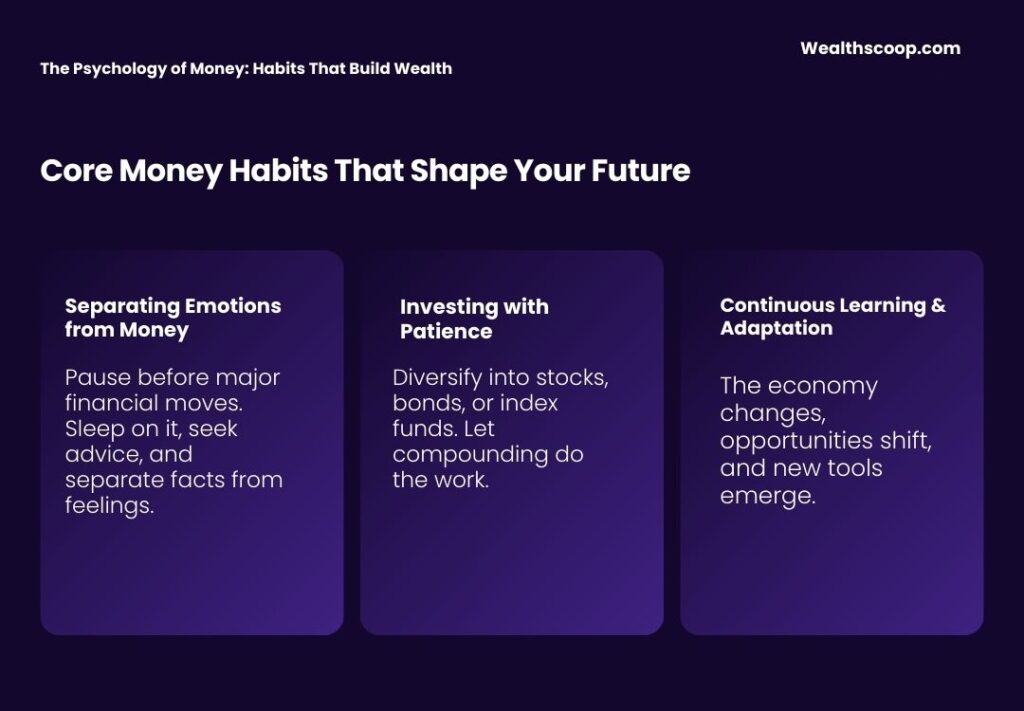
5. Investing with Patience
The world is full of quick-money promises, from crypto hype to “guaranteed” schemes. Many people lose wealth chasing shortcuts, forgetting that real growth is slow and steady.
Investing with patience is about resisting the urge for instant gratification and instead trusting the power of compounding over time.
When you invest in stocks, bonds, index funds, or retirement accounts consistently, your money begins to work for you. The market will rise and fall, but patience is what separates success from panic-driven loss.
A long-term perspective shields you from emotional decisions and helps you ride out volatility. The earlier you begin, the greater the reward, because time magnifies returns in a way no short-term hustle ever can.
6. Separating Emotions from Money
Money is deeply tied to human emotions—fear of losing, excitement of gaining, or the pride of keeping up with others.
Unfortunately, decisions made in emotional states are often the ones that cause the most regret. For example, panic-selling investments during a downturn locks in losses, while overspending during stress only deepens financial anxiety.
The better habit is to create space before making financial choices.
Pause before large purchases, sleep on investment decisions, and seek advice when uncertain. Treat money as a tool, not a scorecard. When you can separate emotions from money, you protect yourself from rash choices and create space for logic to guide your financial path.
7. Continuous Learning & Adaptation
Money is not static—the world changes, economies shift, and new opportunities constantly emerge.
The habits that worked ten years ago may not be enough today. People who thrive financially commit to continuous learning and adaptability.
This could mean reading financial books, following trusted experts, taking online courses, or even learning from your own mistakes. Each experience adds to your financial literacy, equipping you to make smarter choices in the future.
When you stay curious and open to growth, you don’t just keep up—you position yourself to take advantage of opportunities before others do.
The Biggest Money Biases Holding You Back
1. Scarcity Mindset
The scarcity mindset is the belief that money is always slipping away and there will never be enough.
People with this bias often make fear-driven financial decisions—hoarding cash without investing, avoiding risks that could grow wealth, or overspending the moment they get money because they don’t believe it will last.
This mindset creates a self-fulfilling cycle where financial stress is constant, even when income rises.
To overcome it, shift your focus from what you lack to what you control. Building a budget, setting small achievable savings goals, and celebrating progress can train your brain to see money as a renewable resource rather than something scarce.
2. Present Bias
Present bias is our tendency to prioritize immediate gratification over long-term benefits.
It’s why someone might choose a shopping spree today over contributing to their retirement plan. While the present feels urgent and exciting, the future feels distant and less real—until it arrives.
The danger is that short-term thinking leads to long-term regret. Breaking free requires reframing future rewards as just as valuable as today’s pleasures.
For example, visualizing your future self enjoying financial freedom or using apps that show investment growth can help you value the future as much as the present.
3. Social Comparison
Humans are wired to compare themselves to others. Whether it’s neighbors buying new cars, friends posting vacations on Instagram, or colleagues flaunting gadgets, social comparison fuels unnecessary spending.
Instead of making financial decisions based on personal goals, people spend to “keep up,” often going into debt to project a lifestyle they can’t sustain.
The key is recognizing that financial success is deeply personal. Someone else’s purchases don’t reflect their true stability—only their surface. By defining success on your own terms and aligning spending with your values, you free yourself from the expensive trap of competition.
4. Loss Aversion
Loss aversion is the fear of losing money, which is psychologically twice as painful as the joy of gaining it.
This bias often keeps people from investing, taking calculated risks, or even trying side hustles. They stay stuck in “safety,” which ironically prevents them from building wealth.
To overcome loss aversion, start small. Invest modest amounts, test low-risk opportunities, and remind yourself that mistakes are part of the learning curve. By reframing losses as lessons rather than permanent failures, you reduce fear and open yourself up to growth.
How to Rewire Your Money Mindset
1. Track Every Dollar
Awareness is the foundation of change. Many people underestimate how much they spend on small, daily habits like eating out or subscriptions.
Tracking every dollar—whether with a budgeting app, spreadsheet, or journal—forces you to face reality. Once you see the numbers clearly, you can identify wasteful spending and redirect money toward goals that matter.
2. Set Clear Goals
Saving without a purpose feels empty, which is why many give up. When you attach goals to your money—buying a home, funding education, or retiring early—every sacrifice feels meaningful.
Clear goals give you direction and motivation. They also act as a filter, helping you decide if a purchase supports your future or distracts from it.
3. Celebrate Small Wins
Changing financial habits is hard, and progress can feel slow.
Celebrating small wins keeps you motivated. Whether it’s saving your first $100, paying off a credit card, or hitting a monthly budget target, acknowledge it.
These small celebrations create positive reinforcement, making you more likely to stick with your habits long-term.
4. Surround Yourself with the Right People
Money habits are contagious. If your circle normalizes overspending, debt, or reckless financial choices, you’re more likely to mirror them.
Surrounding yourself with people who value discipline, saving, and long-term planning influences your mindset for the better.
Even if you can’t change your circle immediately, consuming content—books, podcasts, or blogs—by financially wise people can shift your outlook.
5. Practice Gratitude
Gratitude is one of the simplest but most powerful mindset shifts. When you focus on what you already have instead of chasing what you don’t, you reduce the urge to overspend.
Gratitude reframes money from being about “never enough” to “more than enough.”
Regularly reflecting on your progress, blessings, and financial wins, no matter how small, strengthens contentment and reduces anxiety.
Final Thoughts
Wealth is not built on hacks or shortcuts—it’s built on habits. If you want a stronger financial future, start by reshaping your psychology around money.
- Spend intentionally.
- Save before spending.
- Invest with patience.
- Protect yourself with emergency funds.
- Learn continuously.
Over time, these small shifts compound into financial freedom.
And remember: money isn’t the goal—it’s a tool. The real goal is freedom, peace of mind, and the ability to live life on your terms.